I have a strong desire to ride authentically, but my eyes keep wandering towards beautiful things. Is this the fate of hobbyists who enjoy cycling?
Perhaps spending money on refreshing items for motivation and a break from constantly improving skills is also a reason.
The Willier brand was already quite famous 20 years ago when I first started riding high-end bicycles. At first, I mistook it for an English brand because the Italian-sounding name didn't seem right.
I only found out later that it was Italian. Even then, I thought their unique metallic copper color was really cool.
Bianchi's Celeste green reminds me of Giosso's blue, which is also a signature color.
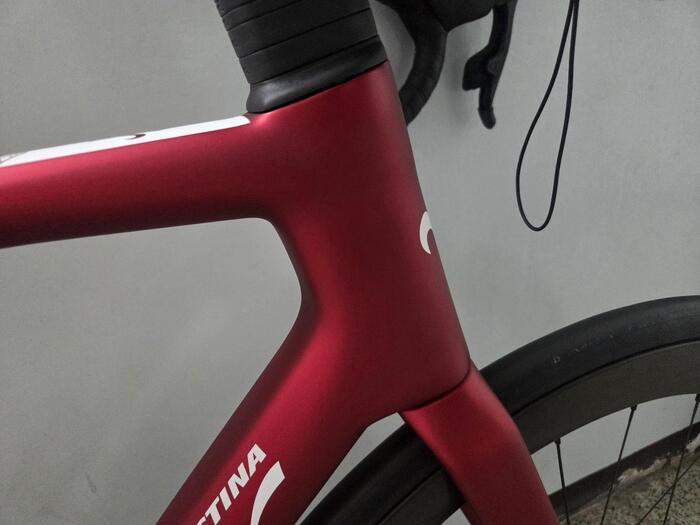
I don't think that color is available anymore. They seem to be pushing velvet red as their signature color now.
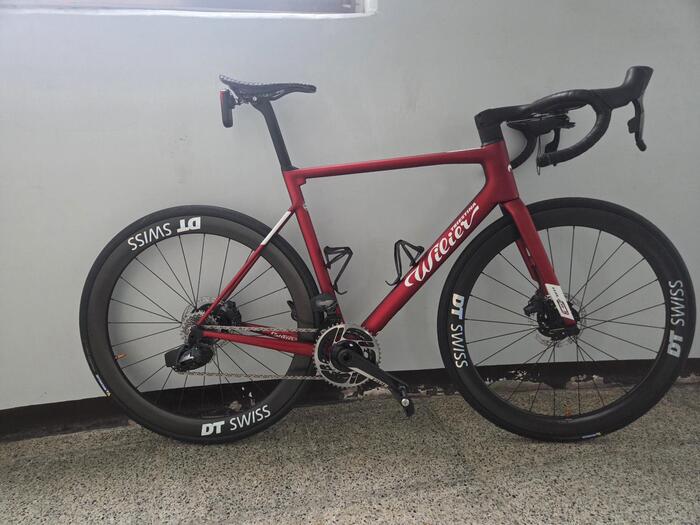
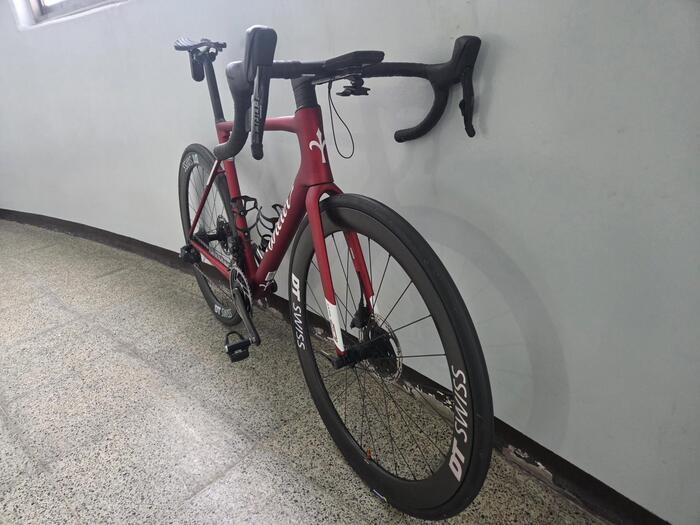
As I get older, I find myself wanting to ride comfortably rather than aggressively. I also believe that riding comfortably can lead to better performance. That's why I wasn't particularly interested in the popular aero bikes or those close to them because they have a lower stack height compared to the horizontal top tube. However, while browsing, I came across a bike in a size that fit me perfectly and a bright red color that I loved. So I bought it.
Before riding this bike, I had been riding my Colnago Extreme Power for almost 20 years. I also rode BMC SLC01 and Colnago MasterX Scappin Cromoly. Looking back, the bikes I liked were all comfortable to ride.
Surprisingly, the Colnago Extreme Power had a good ride quality. The Colnago MasterX and Scappin Cromoly had a unique charm with their characteristic springiness and rhythmic feedback when pedaling. The BMC was also comfortable to ride and lightweight for its time (under 1kg), but I couldn't use tires larger than 25C due to clearance limitations.
Although I bought a new bike, I hadn't ridden it much. Since it had been neglected for so long, the brakes needed bleeding and the headset was loose. After tightening the handlebars, cleaning, and washing it, my first impression was that it felt stiff.
Reviews at the time of its release commonly praised its surprisingly comfortable ride quality. However, since I had been riding bikes known for their comfort, I wasn't particularly impressed. But I did appreciate its stability on descents and rough roads. The stiffness was consistent, especially when climbing hills, as it efficiently transferred pedaling power.
Of course, I wouldn't expect a significant performance difference compared to my previous records, and the geometry isn't drastically different either. But the unique feeling of pedaling was interesting.
The frame weighs around 780 grams for a medium size. However, considering that my large size with matte velvet red paint is heavier, it seems reasonable to assume that it weighs about 100 grams more.
Willier uses different tube thicknesses depending on the size, which contributes to the weight increase. The matte color itself has a thicker coating, further adding to the weight.
The total weight, including a SRAM Force D1 groupset with red cranks, rotors, and cassette, 1300-gram wheels, Garmin Rally 200, two water bottle cages, saddle mount, and handlebar mount, was measured at 7.4 kilograms. This is a sufficiently light weight. However, it's a bit disappointing that even if I replaced the rest of the groupset with red components, the weight saving would only be about 100 grams.
Of course, Garmin pedals are about 100 grams heavier than Dura-Ace pedals, and two water bottle cages weigh around 40 grams each. The front and rear mounts weigh about 90 grams each. So, while the general consensus is to exclude pedals and accessories when discussing bike weight, I could technically cut it down to 6 kilograms. However, compared to my previous rim-brake bikes that easily hovered around 6 kilograms, this weight is a bit disappointing.
Nowadays, rim-brake bikes are so cheap in the used market that their cost-effectiveness in terms of weight is overwhelming.
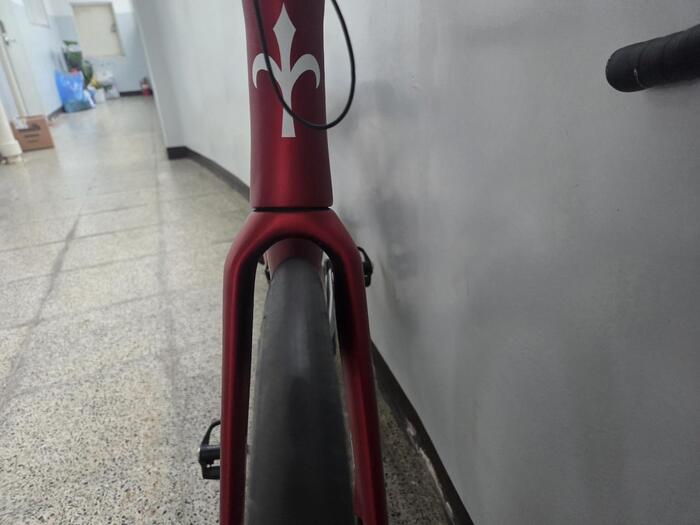
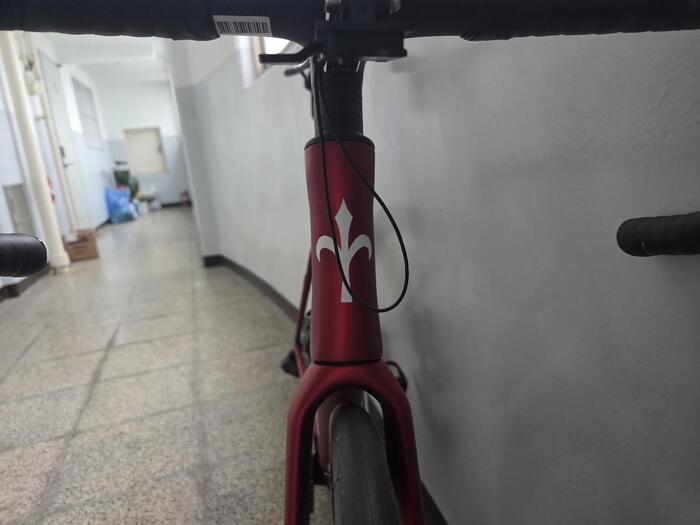
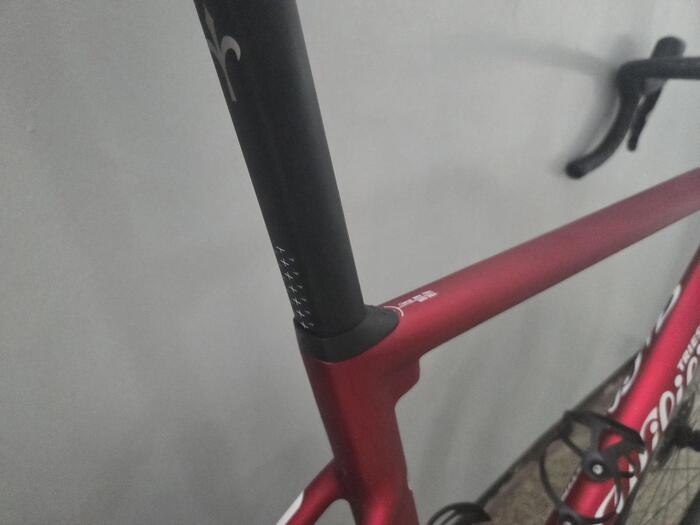
Visually, it's a traditional all-round bike. However, the fork and head tube design resemble those of aero bikes. The D-shaped seatpost suggests an effort to improve aerodynamics.
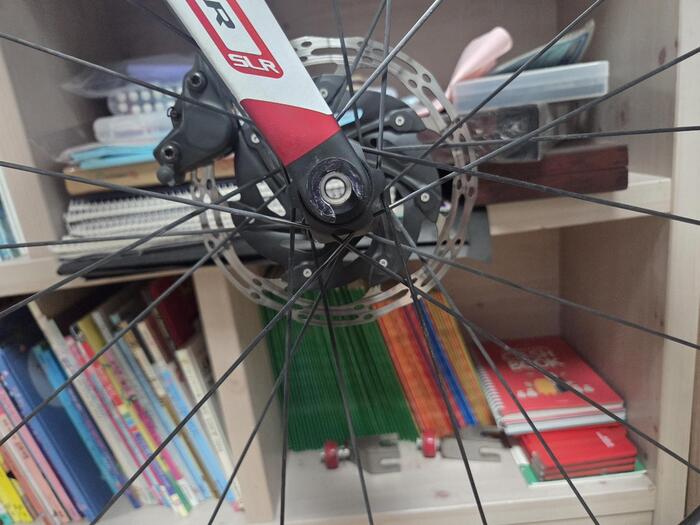
The fork and chainstay have different thicknesses where the disc brakes are mounted to effectively absorb braking torque. While the fork has a symmetrical shape, the chainstay has a distinct asymmetrical design.
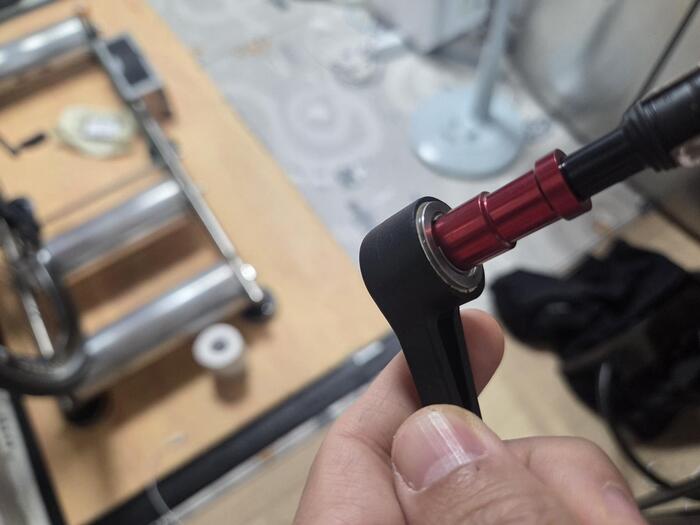
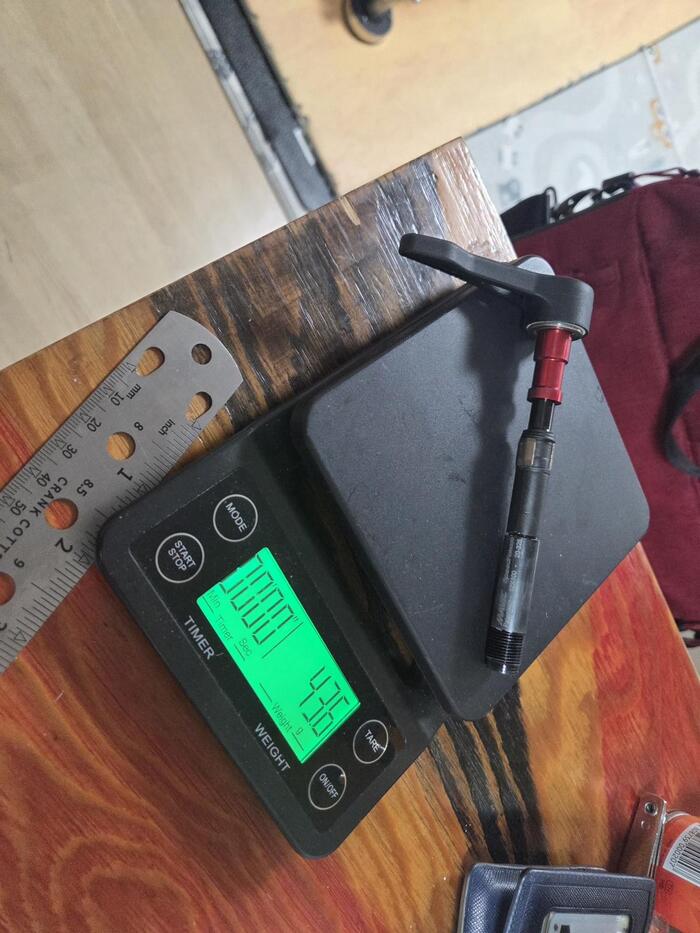
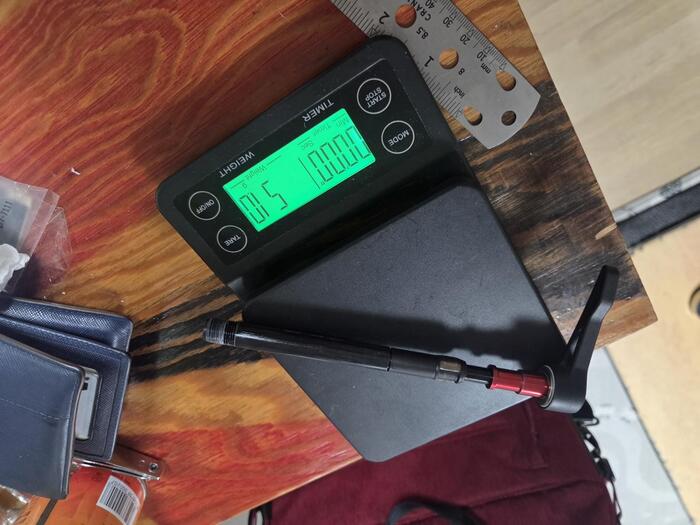
Mavic's patented Speed Release axle is used for the dropouts. Unlike typical thru-axles, one side opens like a QR mechanism, allowing for easy wheel removal and installation without completely removing the axle.
Personally, I prefer sticking to standards. However, it seems that replacing the axle with a standard one wouldn't be a major issue as long as the length and pitch are matched.
The axle weighs about 93 grams for both front and rear wheels. It has a more complex structure than a standard axle and a torque limiter built into the handle, which causes the handle to spin freely when a certain amount of force is applied.
However, replacing it with a standard aluminum axle would save about 40 grams, making me tempted to do so. ㅎ
Compared to Colnago and Pinarello, Willier seems to have a different direction.
Colnago and Pinarello evoke images of heritage luxury brands with a slightly conservative approach. In contrast, Willier actively collaborates with other companies and embraces new technologies.
If Colnago and Pinarello feel like skilled workshops, Willier feels more like a tech-savvy brand focused on performance.
Watching YouTube videos, I see that Willier's representatives clearly explain the technical aspects of their products and the goals they aim to achieve with each model. This consistent emphasis on embracing new technologies and prioritizing performance is evident in their approach.
This time, the Zero SLR, which I purchased, is said to aim for weight reduction while increasing rigidity. They say that the stiffness has been improved by almost 30% compared to the previous model by improving the material, and they have incorporated know-how gained from developing the internal cockpit and aerobike. They also used different tubes for each size to make all sizes of frames feel the same. Looking at it, the bicycle's appearance doesn't seem particularly special, but I felt that the company's direction was clear.
However, when looking at the frame, there is a protruding part in the shape of a wedge where the seat post is fixed. It's a bit regrettable aesthetically.
I wonder if it would have been better to use more carbon fiber even if the weight increased by a few grams and process it more smoothly.
That said, after riding a model from over 10 years ago with a slightly different concept, I feel that the feeling is a bit different and it's fun to ride.
Moreover, in cases like Colnago or Pinarello, there seems to be a compulsion that something like Campagnolo parts, which were once driving forces, should be included. This brand is Italian, but it has a multinational feel, so there's the fun of combining things and no awkwardness regardless of what you use.
Although my field riding was only about 300 kilometers, which is not enough to grasp something deeply, I felt happy after riding a bike for a long time, so I'm writing this down.