
Since this is a translation of an overseas article, there may be some mistranslations.
The Apple TV 4K could finally get Siri AI, Wi-Fi 7, and a much faster processor in 2026.
Will the next generation Apple TV 4K be able to justify its premium price with Siri AI, Wi-Fi 7, faster hardware, and deeper integration with iPhones and AirPods?
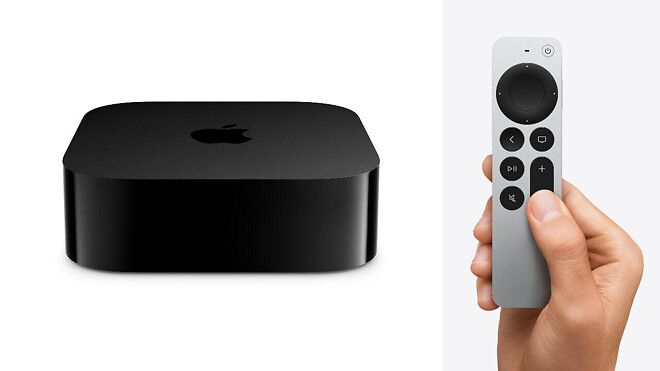
Apple hasn't released a new Apple TV 4K since 2022, which is a noticeably long time in a market where Roku, Amazon, Google and almost all major TV manufacturers are constantly updating their streaming platforms.
This situation could finally change this fall.
While Apple hasn't announced a new Apple TV 4K, several reports currently point to a 2026 hardware refresh with a significantly faster processor, more memory, Apple's N1 wireless chip, Wi-Fi 7, and the next generation Siri powered by Apple's expanding AI platform. An updated Siri Remote is also reportedly being considered.
We raised this possibility back in June when eCoustics covered tvOS 27, wondering if the Apple TV 4K was essentially just waiting for its AI moment. Two months later, the hardware side of this equation is starting to look considerably more interesting.
What could change?
The current third-generation Apple TV 4K uses Apple's A15 Bionic processor with Wi-Fi 6 and Bluetooth 5.0. The $199 Wi-Fi version offers 64GB of storage, while the $249 model adds 128GB, Gigabit Ethernet, and Thread networking support.
According to current reports, the next Apple TV 4K could include:
• An A17 Pro processor or better
• More system memory
• Apple's N1 wireless networking chip
• Wi-Fi 7, Bluetooth 6 and Thread are also possibilities
• Apple's next-generation Siri AI
• An updated Siri Remote
References found in Apple software have linked an unreleased Apple TV to the A17 Pro, but Apple could ultimately use something even newer by the time the product launches. Apple has also not confirmed how much memory the new model will include or exactly what Apple intelligence features will work in tvOS 27.
In other words, there's a lot of smoke, but Apple hasn't shown us any fire yet.
Does a streaming box really need an A17 Pro?
Not for Netflix.
Even 4K Dolby Vision streaming doesn't require anything close to the computing power of an A17 Pro. The Roku Ultra already handles 4K, HDR10+, Dolby Vision and Dolby Atmos, and Google's $99.99 Google TV streamer supports the same major HDR formats and Dolby Atmos.
The more interesting question is what Apple will be able to do with all that extra processing power.
The A17 Pro supports hardware-accelerated ray tracing and is powerful enough to run Apple intelligence. This creates a lot more headroom on the Apple TV for more sophisticated gaming, AI processing, and future smart home features than what Apple needs for its existing video streaming.
This could make Apple Arcade more reliable on the TV and provide the processing resources needed to make Siri a more useful tool than just a voice recognition remote.
After four years, simply making Netflix run faster would be a pretty dramatic waste of silicon.
What will the Apple TV 4K offer that Roku doesn't?
Because photo and sound formats alone no longer deliver easy victories for Apple, the comparison becomes more interesting here.
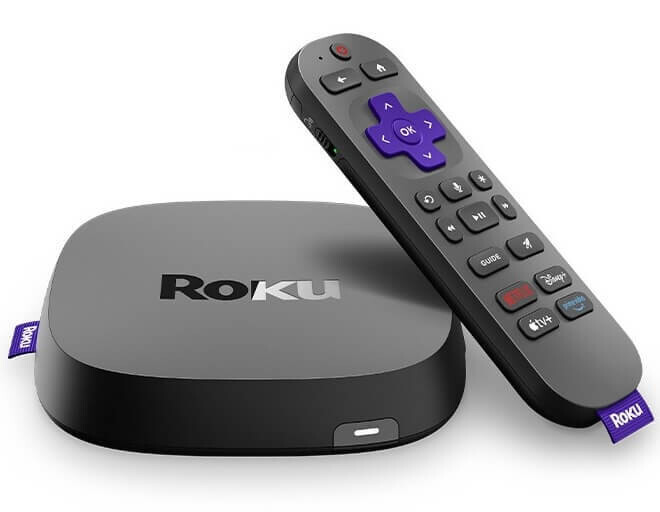
• Roku Ultra 4K streamer: Already supports Dolby Vision, HDR10+, Dolby Atmos, Wi-Fi 6 and Ethernet, and also provides DTS Digital Surround passthrough via HDMI.
• Apple TV 4K: Supports lossless audio formats including Apple Lossless, FLAC, AIFF and WAV along with Dolby Atmos, Dolby Digital Plus 7.1 and Dolby Digital 5.1.
However, neither device should be confused with a dedicated local media player that can pass all lossless movie soundtrack formats to an A/V receiver or processor. Apple does not list support for Dolby TrueHD or DTS HD Master Audio, and Roku specifies that Dolby TrueHD and DTS HD are not supported.
Where Apple gets ahead is how audio fits into a larger ecosystem. Apple TV 4K can deliver Dolby Atmos Music to compatible A/V receivers, soundbars, TVs or HomePod systems through Apple Music, and also supports Apple Music Lossless up to 24-bit/48kHz. Compatible AirPods and Beats headphones add personalized spatial audio with dynamic head tracking, giving Apple TV 4K a much broader role as a music and personal listening platform than Roku Ultra.
Apple's broader advantages work in much the same way.
The iPhone works as a remote control, authenticates purchases using Face ID, helps locate the Siri remote, and can perform Apple's automated color balance process for connected TVs. Apple TV 4K can also use an iPhone or iPad as a Continuity Camera for FaceTime calls on TVs with Center Stage.
Through audio sharing, two pairs of compatible AirPods can listen simultaneously with independent volume control, and Apple Music, Fitness+, Arcade, iCloud Photos, HomeKit and Matter are integrated on the same platform.
None of these features individually make Apple TV indispensable. But taken together, they explain why someone with an iPhone, Apple Watch, AirPods and other Apple products might view Apple TV 4K very differently from someone who just needs a box to stream Netflix, HBO Max or Disney+.
Siri AI Could Be the Real Upgrade
So the most significant rumored change might have little to do with picture quality.
According to reports, evidence within tvOS 27 indicates that Apple's new Siri will be introduced to Apple TV, while separate reports suggest the next-generation Apple TV will have the hardware needed to run it. Apple has not announced specific features or confirmed they will be exclusive to new hardware.
A truly useful interactive assistant on TV could potentially enhance content discovery, smart home control and interaction with Apple's other services. Rather than remembering which streaming app has a show, the ultimate goal might be to simply ask for what you want and have the platform figure out the rest.
That's the theory.
Apple still needs to prove that next-generation Siri can actually deliver that experience, and because the company has provided plenty of delays around its AI ambitions, no one should carve their name on the trophy yet.
Roku and Google Still Have a Significant Advantage
It's price.
Apple significantly made the value equation harder in June 2026, raising the current Apple TV 4K from $129 to $199, and the Ethernet and 128GB version from $149 to $249. Apple has not announced pricing for the next-generation model.
By comparison, Google TV Streamer is priced at $99.99, while Roku Ultra's suggested retail price is $149.99 and often can be purchased for less. Both devices already support the core 4K HDR and immersive audio formats most consumers need.
That's a significant difference.
If your needs start and end with Netflix, Disney+, YouTube, Prime Video and live TV, Apple will need to offer something far more compelling than Wi-Fi 7 to justify charging significantly more than Google TV Streamer or Roku Ultra.
Who Will Benefit?
The strongest argument for the next-generation Apple TV 4K will likely be made by consumers who have already made significant investments in Apple's ecosystem, particularly households that use iPhones, AirPods, Apple Music, Fitness+, Apple Home, and other Apple services.
Home theater users will also likely appreciate Apple's strong support for Dolby Vision, HDR10+, and Dolby Atmos, but those who need extensive lossless bitstream support for locally stored movie files may still want to look for more specialized playback hardware.
A significantly faster processor could also make the platform more appealing for gaming, and deeper Siri integration could transform the Apple TV from just another device connected via HDMI into a more capable smart home controller.
However, owners of existing third-generation Apple TV 4Ks may want to keep their credit cards in their wallets until Apple precisely explains what the new hardware can do. The current A15 model is already powerful enough for typical streaming, and Wi-Fi 7 alone won't make 4K movies look or sound any better.
The new Apple TV 4K in 2026 could be far more interesting than a typical faster processor and new remote refresh.
An A17 Pro chip or better, Siri activated throughout the system, Wi-Fi 7, and deeper smart home integration could push the Apple TV further away from being just another streaming player and towards becoming Apple's main living room computer.
That's what it needs to do too.
Roku Ultra and Google TV streamers already offer excellent 4K HDR streaming at a significantly lower price, and neither Apple nor Roku has a decisive advantage in supporting all possible home theater audio formats. Apple's stronger argument lies in how tightly the Apple TV integrates Dolby Atmos, Apple Music, AirPods, iPhones, FaceTime, games, and smart home control into one platform.
If Apple can make those pieces work together in a way that competitors can't easily replicate, the next-generation Apple TV 4K could finally answer the question of why someone should spend over $200 on a streaming box in 2026.
But until Apple announces it, it remains a very interesting "what if" story.
▶ Source: https://www.ecoustics.com/news/apple-tv-4k-2026-siri-ai-wifi-7/
▶ Source: https://www.4kfilme.de/apple-tv-4k-details-zum-streaming-player-verdichten-sich/

