As you know, the US market is booming right now. The Korean market has dropped more than 30% from its high, but the Nasdaq and S&P500 have hit new highs.
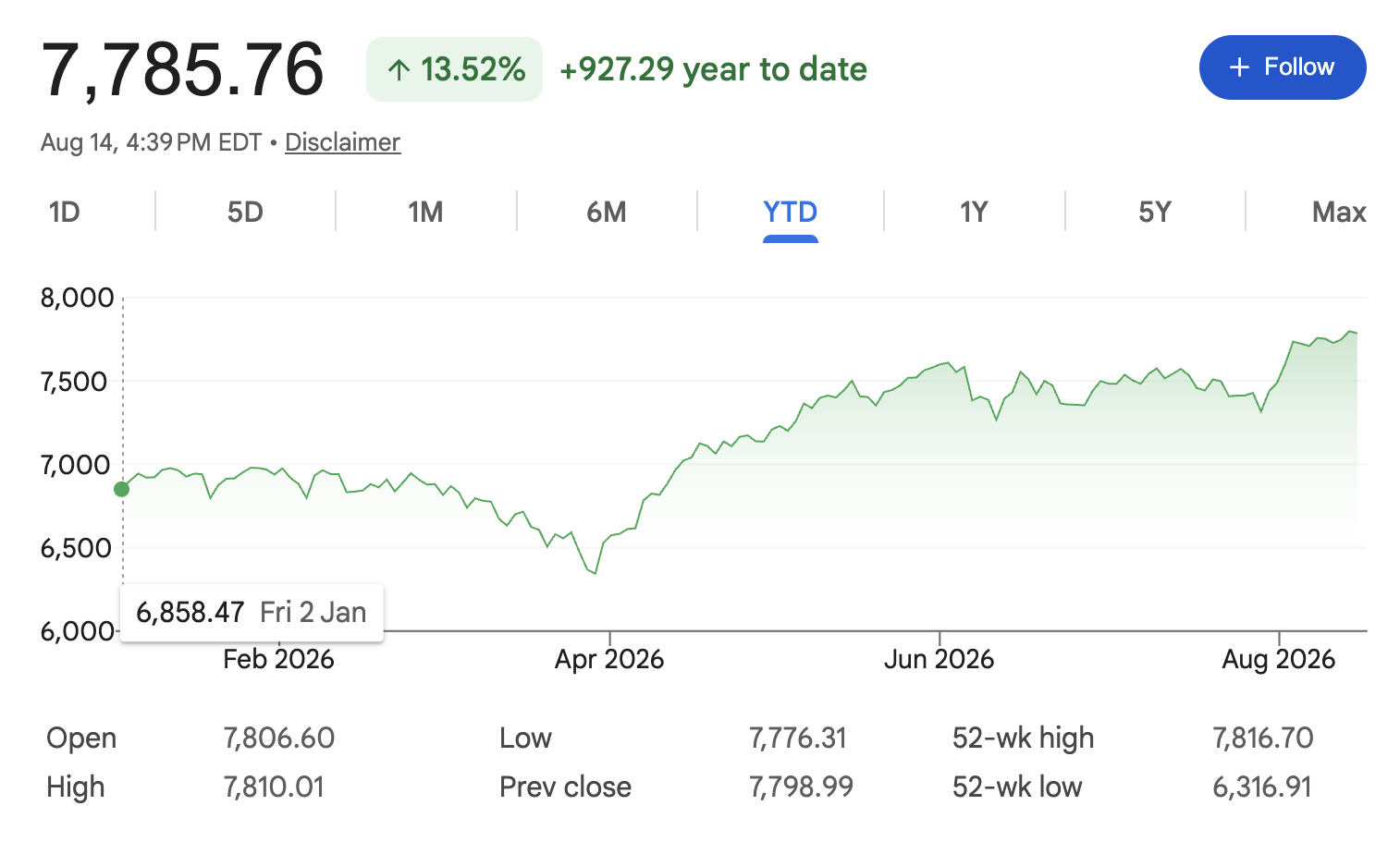
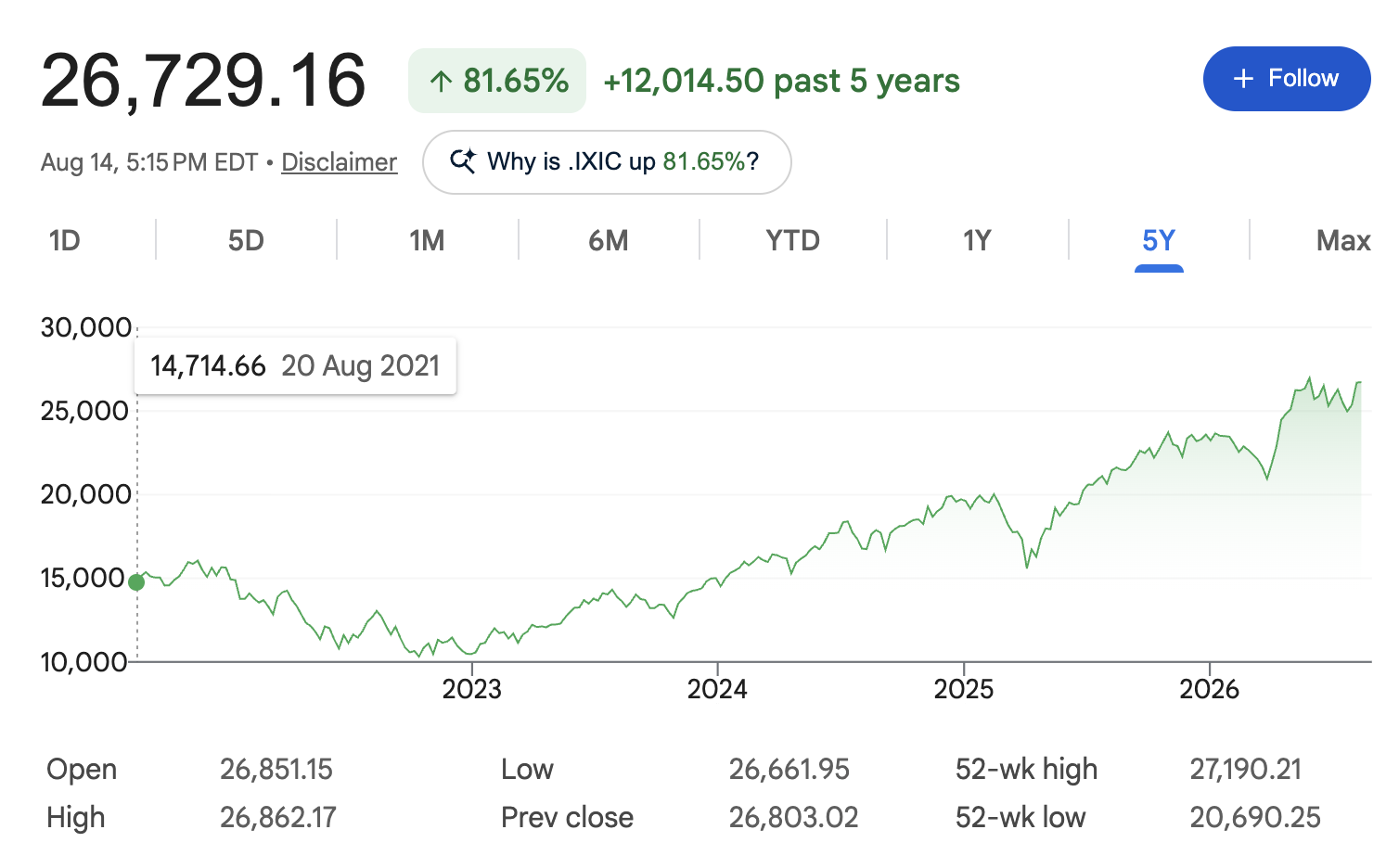
Just looking at the chart, since the start of the Iran war in March there's been a sharp rise. The S&P500's sectors are so broad that it rose without a correction in July, but the Nasdaq went through a semiconductor correction and then hit new highs again.
The current situation in the US is
Recent decline in nonfarm payrolls
CPI (inflation) growth rate has come down somewhat
The 10-year treasury yield is fluctuating between 4.6~4.7 (the 30-year treasury yield is at its highest in 19 years)
Oil prices rose due to the Iran war, but domestic US oil prices have come down somewhat
That's the situation. Honestly, just looking at treasury yields, there's no reason for risk assets like tech stocks to rise right now. It's rising while walking a tightrope — when the 10-year yield first hit 4.7, it seemed like a fairly significant correction was coming, but the market seems to have adjusted quickly, and lately it doesn't even pretend to pull back.
Semiconductor stocks have finished their July correction and are stretching out to rebound again, and the share prices of hyperscalers and neoclouds are heading back toward their previous highs. After seeing the Q2 earnings, the assessment became "this level of profit is enough," and since it's actually been proven that the cloud business makes money, the market is rallying with confidence.
1. Kevin Warsh's inscrutable ambiguity
Now a question arises here. So how much would treasury yields need to rise before it becomes dangerous?
Every expert says something different — some say 4.7, others say up to 5.1 is fine. For now, we've gotten a taste of 4.7.
Looking at the trend of the 10-year treasury yield, there seems to be resistance somehow trying to avoid going up to 4.8. So personally, I think the threshold might be 4.8.
CPI growth has slowed, oil prices are holding around the $80 line, and everything has stabilized, so we need to first look at why treasury yields are rising right now.
Currently, among the hyperscalers, Microsoft, Google, Oracle, and Amazon are all issuing corporate bonds to fund investments. When corporate bonds are issued, it puts a burden on the overall supply and demand of the bond market. When fundraising overlaps, investment demand gets split up and long-term bond investment institutions start viewing the market conservatively. When there's an oversupply of bonds, competition for liquidity occurs, leading to falling bond prices and upward pressure on yields.
Right now, people dealing in US treasuries are having a miserable time. The bonds aren't selling and only the yields keep rising. There's no way to get a handle on it.
The Cleveland Fed president, the New York Fed president, and the Minneapolis Fed president — the regional presidents right now are all speaking with one voice saying rates need to be raised.
Meanwhile, the most relaxed person is Trump, and Bessent is looking at the market very optimistically. Meanwhile, Kevin Warsh, the FOMC chair who decides interest rates, isn't giving any indication at all of how he views rates.
He's even declared that he won't issue forward guidance (what he plans to do going forward) after the rate announcement.
Forward guidance started when Ben Bernanke first began communicating with the market after the 2008 financial crisis, when everyone was viewing the market negatively and reluctant to enter. He started giving forward guidance to communicate with the market. Roughly, he'd set the rate and then say in advance, "If market conditions are like this going forward, we could cut."
So the impact of FOMC announcements started growing stronger from that point, and depending on whether guidance is given, it now affects the stock market.
As mentioned above
Treasury yields marching higher
Fed regional presidents' remarks about raising rates
The spark for a rate hike is still alive, and CPI growth has come down, and actual September rate bets currently lean more toward holding steady, but Kevin Warsh is the type who could raise once and then cut.
If you imagine what might happen if he raises rates in September
He'll explain "we raised based on such and such data," and if he doesn't follow up with forward guidance after that, the market — which had been kindly given explanations all along — will fall into anxiety and panic, thinking "so does that mean they could raise further?"
If this happens, a crash in high-risk tech stocks will begin. Interest rates are a major blow to tech stocks, and at that point a major correction could hit the overheated US market. The dot-com bubble also began with three consecutive rate hikes, and because of that trauma, if the FOMC — which has only been cutting or holding rates until now — raises rates, there's a high chance the market will convulse and plunge.
Kevin Wash is taking a very ambiguous stance, informing the market of interest rates, and leaving the market to make its own judgments.
2. The Variable of the November Midterm Elections
There is a law of midterm elections, and in the chaotic situation where nothing has been decided before the midterm elections, there is a tradition of the market falling and then rising. It is said to have been 100% so far.
Some outlines of victory or defeat are expected to emerge around the end of September, and given Trump's current behavior, there is a high possibility of a Democratic Party advantage.
The problem is that the US Democratic Party is currently opposed to data center construction. Due to concerns about rising electricity, water, and electricity rates, they are pushing for restrictions on new construction and legislation granting 'residents' right of refusal'.
This would be a major blow to hyperscale companies currently building data centers. For starters, Oracle, the weakest link at the moment, will be hit directly, and if the risk of Oracle's default resurfaces, it could lead to a big drop in Big Tech.
Naturally, semiconductor stocks would also fall. If data center construction is delayed, there will inevitably be problems with semiconductor supply and demand. At this point, cyclical defensive stocks (healthcare, Coca-Cola, Walmart) usually see a surge in trading volume, while tech stocks could plummet.
Moreover, given the current overheated market conditions and the risk of bond yields, the magnitude of the decline could be unexpectedly large. There is a possibility of a drop of more than 25%, similar to the decline caused by the tariff issue in April 2021.
The current market sentiment is that semiconductor stocks have fallen significantly due to a renewed focus on supply and demand, so they are considered attractive and buying momentum is returning. Nvidia has seen a sharp rise due to short sellers covering their positions, leading to a short squeeze that has brought it close to its all-time high. Micron also sees short sellers holding on, but with the current buying momentum, short sellers may start to unwind their positions around $1000-$1050, triggering a short squeeze and a significant rise.
While semiconductors have fallen, the overall tech sector is currently in an overheated state and highly vulnerable to a downturn.
There is a possibility of a decline due to seasonal weakness in September and the two risks mentioned above.
Of course, these two scenarios are just assumptions, but they are currently possible.
If the September crisis scenario is correct, it will open up new opportunities, but if we are late in responding, we could suffer significant losses.
There is still time to review your current portfolio. Now is the time to consider what strategy to adopt for the future.

