This is a translation of a foreign article, so there may be translation errors.
https://hothardware.com/news/chatgpt-images-20-released
ChatGPT Images 2.0 Provides the Most Realistic AI Photos OpenAI Has Shown to Date
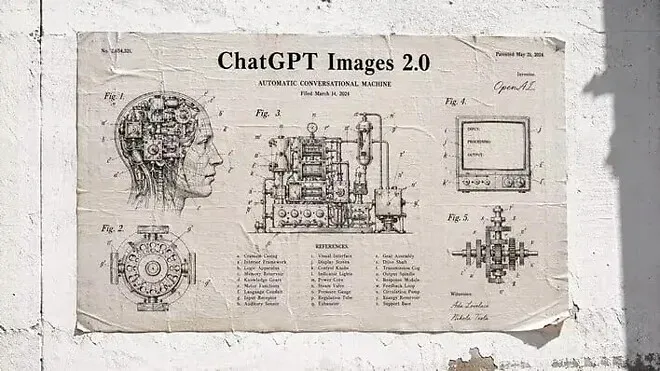
OpenAI has unveiled Images 2.0, the latest evolution in image generation technology, positioning it as a significant leap forward in terms of realism, accuracy, and ease of use in actual creative work. Built on the company's latest GPT-5.3 architecture with a knowledge cutoff in December 2025, this update aims to move beyond experimental image generation toward something closer to a reliable production tool.
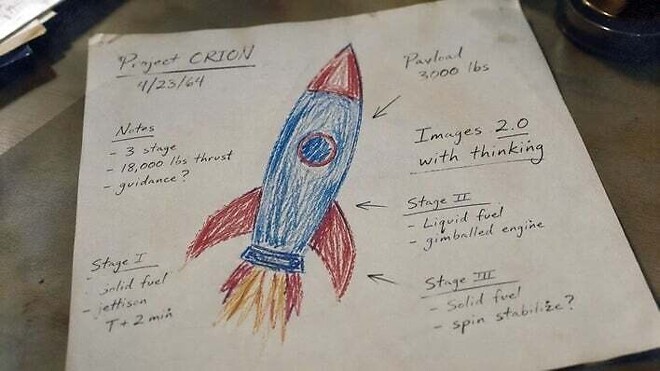
The new model applies a 'thinking' process to image generation, improving overall results.
At first glance, Images 2.0 has improved several chronic weaknesses of AI-generated visuals. Photorealism has made a notable leap forward, more consistently capturing lighting, texture, and subtle imperfections that make images feel less artificial. Equally important, the model demonstrates stronger understanding of composition. This allows it to better organize complex scenes and maintain spatial relationships between objects without the distortions that frequently plagued previous systems.
One of the most practical upgrades is text rendering. AI image tools have historically struggled to generate readable and consistent text in dense layouts such as menus, posters, or interface mockups. OpenAI states that Images 2.0 directly addresses this by producing readable typography and supporting a wider range of languages. The company specifically emphasized improvements in handling Japanese, Korean, Chinese, Hindi, and Bengali, explaining that text is not only rendered accurately but also written to flow naturally within each language.
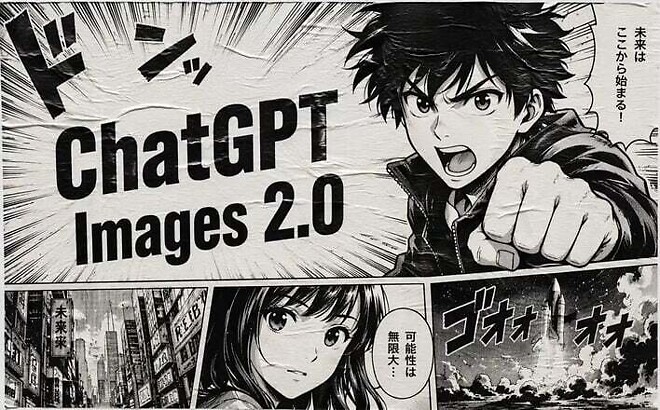
You can now create manga pages with accurate Japanese text.
Additionally, the system has introduced more flexibility in output formats. You can now generate images in a wider range of aspect ratios from 1:3 to 3:1, making it easier to target shapes like mobile banners, widescreen layouts, or vertical social media posts without awkward cropping or workarounds. Combined with higher effective resolution and improved layout understanding, this opens the door to more practical applications in advertising, publishing, and UI prototyping.
Another notable change is the ability to generate multiple different images in a single request while maintaining shared visual logic. This model can produce up to 10 consistent output sets at once, enabling workflows that were previously difficult to achieve in a single go. This includes generating a series of comic-style pages, various poster concepts built around a consistent theme, or detailed infographics divided into multiple panels. Rather than treating each image as an isolated result, the system appears to maintain continuity across the entire set, which can reduce the need for repeated prompt tuning.
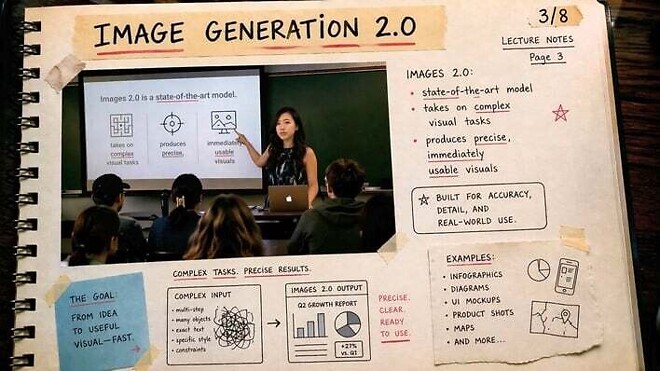
Internally, OpenAI is taking a more structured approach to image generation. The model effectively performs a 'planning phase' before rendering, which helps it follow complex instructions more closely. This change is most evident in tasks that combine multiple constraints such as specific layouts, embedded text, and style directions—tasks where previous models often failed to meet all requirements at once.
Despite these improvements, Images 2.0 still operates within the broad trade-offs inherent to generative AI. More complex prompts and higher quality outputs can increase generation time, and while accuracy has improved, the system is still not entirely free from the possibility of generating inaccurate or inconsistent details. Enhanced realism also raises familiar concerns about misuse, such as cases where generated images could be mistaken for actual photographs.
For developers and content creators, this update signals a shift in the positioning of image generation tools. Moving away from being primarily a creative experimentation tool, it is increasingly being positioned as a component of production workflows that can generate assets requiring only minimal cleanup before use. The ability to handle structured layouts, multilingual text, and multiple image sets suggests a focus on design and communication work just as much as on visual novelty.
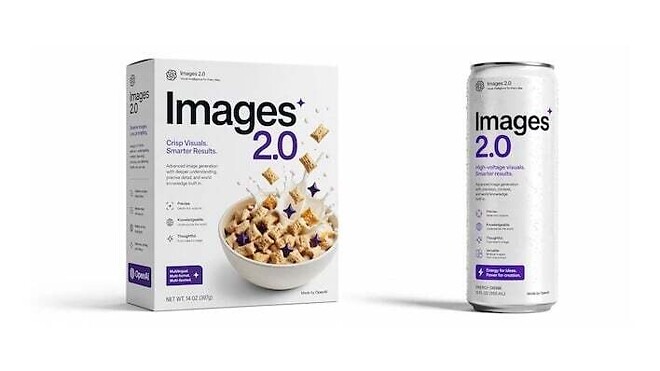
Note that all images in this post were created with Images 2.0.
Whether Images 2.0 will hold a clear advantage over competing systems like Google's Nano Banana will depend on specific use cases where cost, speed, or iterative editing workflows matter. What is clearer is the direction of progress. The gap between 'AI-generated' and 'production-ready' visuals is narrowing, and with this release, OpenAI is demonstrating that image generation is now not just about making things look good, but about creating something that is actually 'usable.'
If you want to see more quick examples beyond what's included here, OpenAI has set up a demo site showcasing various images generated with Images 2.0, highlighting use cases such as UI mockups, narratives with illustrations, and marketing materials. These examples provide a clearer sense of how the system works across diverse scenarios, and support the company's push to present the technology as a practical tool rather than a mere curiosity.
▶ Original source: https://hothardware.com/news/chatgpt-images-20-released

