Since this is a translation of an overseas article, there may be some mistranslations.
https://www.avpasion.com/chips-ia-subida-precio-televisores-audio/
TV, AV Receiver, and Audio Equipment Prices Expected to Rise Due to AI Chip Boom

If you're at all interested in the tech world, you've probably heard that AI is taking over every field. Literally, it's everywhere. But what may not be so obvious is that this AI boom is starting to affect all electronic devices, not just computers.
TVs, AV receivers, audio equipment, console game consoles, headphones, smartphones, and many other consumer electronics are likely to see price increases due to AI. The even more serious point is that this impact is not something far off in the future, but right around the corner.
Utilizing AI requires massive amounts of hardware, including high-performance chips, high-bandwidth memory, ultra-fast storage devices, and network hardware. As a result of this boom, numerous data centers are being built. Consequently, chip and memory manufacturers are focusing most of their resources on producing data center hardware, which is far more profitable than the consumer market.
This problem isn't limited to top-of-the-line GPUs or RAM memory; it extends to all types of hardware, including processors. Manufacturers have already warned about rising costs for all kinds of components, and they say price increases for all sorts of devices are inevitable.
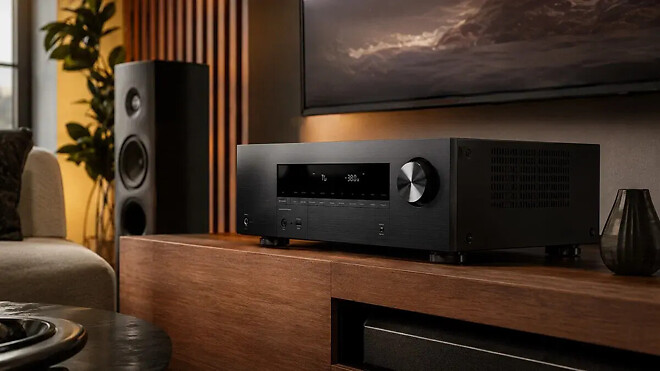
For consumers, this could mean fewer discounts than usual, delayed launches of new products, longer shipping times, and price increases for all devices, from TVs and projectors to media players, soundbars, and AV receivers. Some manufacturers may temporarily absorb the extra costs, but no one can sustain that permanently.
Price Increases Already a Reality
We've previously discussed the RAM memory crisis, graphics card shortages, and exorbitant price increases, which are affecting not only PC gamers but also the console gaming market. Sony raised the price of the PlayStation 5 in April due to the sharp rise in memory prices. Microsoft also increased Xbox prices globally just a few days ago, citing that storage and memory costs had risen by more than 2.5 times.
But this is just the beginning. Apple was one of the first companies to move, raising prices on some devices like MacBooks, iPads, HomePod speakers, and even the Apple TV 4K just a few weeks ago. The price of the upcoming iPhone 18 is also expected to be significantly higher than last year's model.
Beyond computing and gaming, warning signs are already being detected in the audio industry as well. FiiO raised prices for four products in April and warned that further price adjustments may be necessary if component costs continue to rise.

Shure has revealed that the shortage of components due to AI is now extending beyond CPUs and RAM to other raw materials such as memory, circuit boards, copper, and aluminum. Price increases for both new and existing products are expected to begin this month, and some models with low margins may be discontinued altogether.
Network media players, AV receivers, wireless speakers, soundbars, and multiroom audio systems rely on processors, RAM, flash memory, network chipsets, and power management components to drive their operating systems, streaming applications, room correction, video processing, voice control, wireless connectivity, and increasingly prevalent on-device AI features. As a result, all of these product categories will soon be affected.
Of course, the TV industry also seems unlikely to escape these repercussions. Premium models may have some margin leeway to temporarily absorb the increased costs, but entry-level and budget TVs are sold with much tighter margins. If component prices continue to rise, manufacturers' options will be limited to raising consumer prices, reducing discounts, downgrading specifications, delaying launches, or cutting production.
Could China Be a Savior?
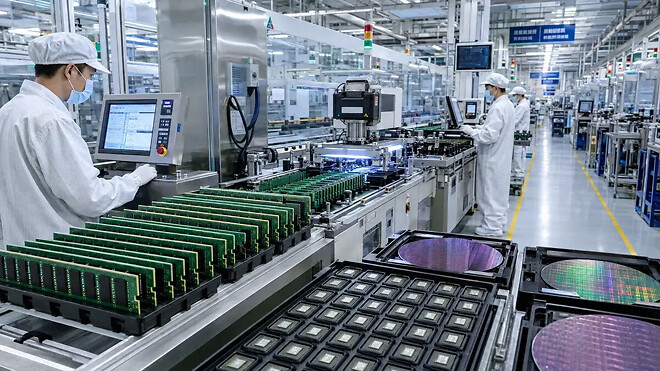
In recent weeks, there has been much discussion about whether China could step in as a savior. It's no secret that China is the world's factory, and its production capacity surpasses that of any other country. However, analysts and experts are questioning whether China will actually alleviate the component shortage and stabilize the market or seize this opportunity to take control of the manufacturing leadership for these components.
As the global supply of key components such as processors, memory, and storage devices is strained due to the AI boom, Chinese semiconductor companies with headquarters in China are rapidly expanding their production capacity. As mentioned earlier, this additional production capacity could help ease supply chain bottlenecks in the long run and help consumer electronics manufacturers curb rising costs.
However, Chinese companies are also participating in the race to secure the best AI models. DeepChi, Momenta AI, Alibaba, and Z.ai are developing advanced, more economical, and accessible models than their American counterparts. As a result, Chinese AI platforms are gaining many users beyond national borders.
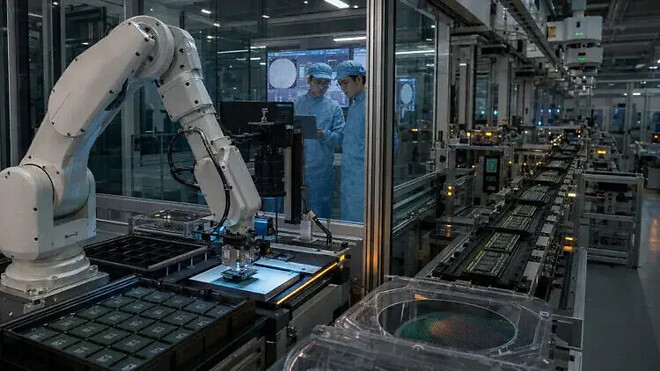
It is true that the United States holds more powerful AI accelerators, such as Nvidia chips. It is also true that China still faces limitations in advanced manufacturing equipment and high-performance chip production capabilities. However, this has not stopped China's progress and has instead accelerated its efforts to replace American processors, software, and manufacturing equipment with domestic alternatives.
With this momentum, it is projected that Chinese processors will account for about half of the Chinese AI chip market by 2026, leading to a decline in the dominant position held by American semiconductor companies. China is not simply increasing its production capacity; it is building a competitive AI ecosystem that can challenge the United States' leadership in global technology infrastructure, standards, hardware, and models.
Ultimately, we are faced with a complex political and economic dilemma. China's production expansion could ease supply chain bottlenecks, lower component costs, and improve product availability. However, relying on Chinese memory, processors, and manufacturing capabilities would increase Beijing's influence over the supply chains used by TV, audio equipment, automotive, smartphone, and computer manufacturers.
Whether the United States and other countries will allow China to become the world's indispensable supplier in this crucial technological field remains to be seen.
▶ Source: https://www.avpasion.com/chips-ia-subida-precio-televisores-audio/

